
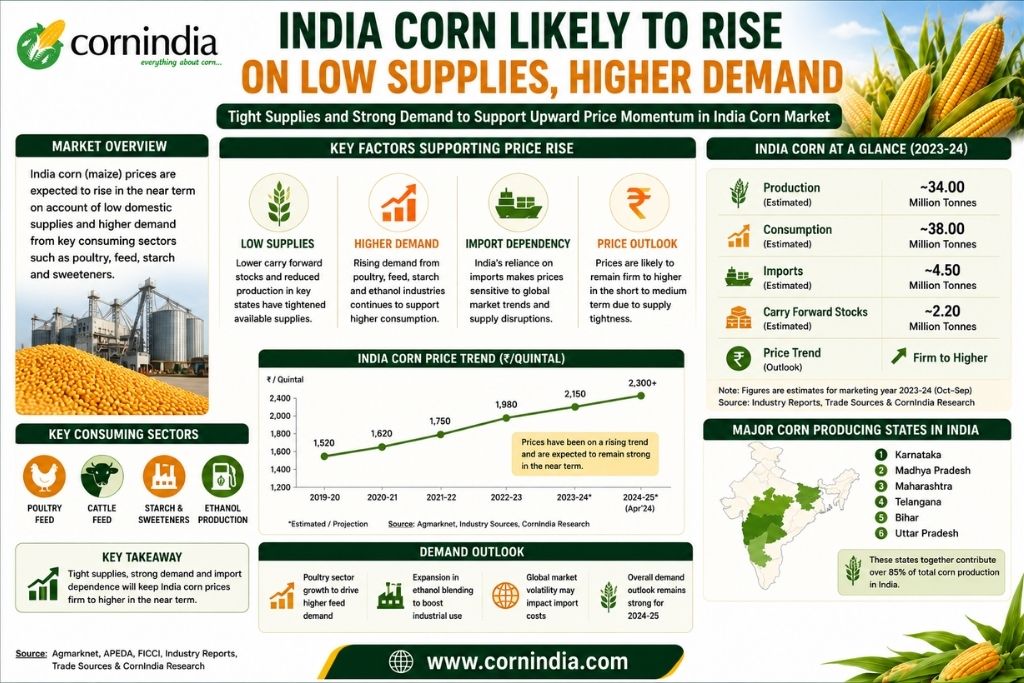
India’s maize (corn) market is witnessing a bullish trend, with prices expected to remain firm or even rise further in the coming weeks. A combination of tight supply in spot markets and robust demand from the poultry and feed industry is driving this upward momentum. This development is crucial for farmers, traders, and agribusiness stakeholders across the maize value chain.
Market Overview: Why Corn Prices Are Rising
Indian corn futures recently touched their highest level in over two months, signaling strong market sentiment. The key drivers behind this price surge include:
- Lower-than-expected arrivals in mandis (spot markets)
- Strong procurement by feed manufacturers
- Seasonal increase in poultry consumption
- Reduced production estimates for the current crop year
Despite expectations of fresh crop arrivals, supply levels have remained constrained, supporting firm prices in both futures and physical markets.
Supply Constraints: A Key Price Driver
One of the primary reasons behind the rising corn prices is limited availability in the domestic market.
Traders anticipated increased arrivals from the new season harvest, but that has not materialized as expected. This has created a supply-demand imbalance, pushing prices upward.
Additionally, government estimates indicate a decline in maize production:
- 2012/13 Production Estimate: 14.89 million tonnes
- Previous Year Output: 16.22 million tonnes
This drop in output has further tightened supply, adding pressure on prices.
Strong Demand from Poultry and Feed Industry
The poultry sector, one of the largest consumers of maize in India, is currently driving demand.
According to market participants, feed manufacturers are aggressively buying whatever quantities are available in the market.
“Demand from feed makers is very strong. They are buying whatever supplies are reaching the market. Prices are unlikely to go down as demand for poultry products is expected to rise during the winter season.”
Shreedhar Reddy, a trader in Davangere, Karnataka
Why Demand Increases in Winter
- Higher consumption of protein-rich and fatty foods
- Increased demand for chicken and eggs
- Seasonal boost in hospitality and food services
This seasonal consumption pattern translates directly into higher maize demand for feed production.
Export Demand Remains Weak
Interestingly, the current price rally is not driven by exports.
Traders report that:
- Export demand is currently subdued
- Domestic consumption is the dominant price driver
- Even without export support, prices are holding firm
This highlights the strength of internal demand, especially from the livestock and poultry sectors.
Price Outlook: What to Expect Next
Based on current market dynamics, the outlook for maize prices in India remains bullish in the short term.
Key Factors Supporting Prices:
- Continued tight supply in mandis
- Strong poultry feed demand
- Lower crop production estimates
- Delayed or weak new crop arrivals
Potential Risks:
- Sudden increase in arrivals from harvesting regions
- Government policy interventions
- Changes in poultry demand trends
What This Means for Stakeholders
For Farmers
- Opportunity to realize better prices
- Consider holding stocks strategically if storage permits
For Traders
- Monitor arrival trends and mandi prices closely
- Expect price volatility in the near term
For Feed Manufacturers
- Plan procurement efficiently to manage rising input costs
Frequently Asked Questions (FAQs) on India Corn Prices
Why are corn prices increasing in India?
Corn prices in India are rising due to lower-than-expected supply in spot markets and strong demand from poultry feed manufacturers. Reduced production estimates have also contributed to the price surge.
How does poultry demand affect maize prices?
Maize is a key ingredient in poultry feed. During seasons like winter, higher consumption of chicken and eggs increases feed demand, which directly pushes maize prices upward.
What is the current maize production outlook in India?
The government has estimated maize production at 14.89 million tonnes, which is lower than the previous year’s 16.22 million tonnes, leading to tighter supply in the market.
Are exports influencing corn prices in India?
Currently, export demand is weak, and the price increase is mainly driven by domestic consumption, especially from the poultry and livestock sectors.
Will corn prices continue to rise in the coming months?
In the short term, prices are expected to remain firm or bullish due to tight supply and strong demand. However, future trends will depend on crop arrivals, weather conditions, and policy changes.
What should farmers do in a rising maize price market?
Farmers can benefit by monitoring market trends and selling strategically. If storage facilities are available, holding produce for better prices may be advantageous.
Conclusion
The Indian maize market is currently in a supply-tight, demand-driven phase, with prices likely to remain firm in the near term. Strong demand from the poultry sector, coupled with lower production estimates and delayed arrivals, is shaping a bullish outlook.
For stakeholders across the maize ecosystem, staying informed and responsive to market signals will be key to maximizing opportunities in this evolving scenario.









0 Comments