

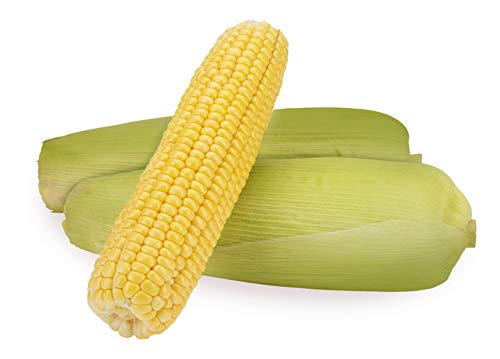
Sweet corn is one of the most rewarding crops you can grow in India right now. It has a short growing cycle of just 70–80 days, earns significantly better returns per acre than field corn, and has a growing base of buyers — from local vegetable markets and hotels to food processors and frozen food companies.
But sweet corn is also more demanding than field corn. It has a narrow harvest window, needs careful attention at the right stages, and does not forgive poor timing. Grow it well, and it pays handsomely. Grow it carelessly, and you lose the premium.
This guide walks you through every step — from selecting the right seed variety to harvesting at the perfect moment — so you get the best out of your sweet corn crop.
Step 1: Know Your Season First
Sweet corn can be grown in three seasons in India:
Kharif (June–July sowing): The most common season. Relies on monsoon rainfall, which reduces irrigation costs. Harvested by September–October. Main risk: waterlogging and heavy pest pressure from stem borers and fall armyworm.
Rabi (October–November sowing): Less common but increasingly popular. Requires irrigation but offers better yields, lower pest pressure, and often better prices since market arrivals of sweet corn are lower. Harvested by February–March. Watch out for terminal heat stress if sowing is delayed past November.
Spring/Zaid (February–March sowing): Practised in Punjab, Haryana, and parts of Uttar Pradesh. Works well where summers are not too harsh early in the season.
Quick rule of thumb: If you have reliable irrigation access, rabi sweet corn will almost always give you a better yield and a better price. If you're rain-fed, stick to kharif.
Step 2: Choose the Right Variety
This is probably the single most important decision you'll make. Sweet corn varieties are not interchangeable with regular field corn — you need varieties specifically bred for high sugar content and eating quality.
Here are the main options available to Indian farmers:
ICAR/Government-bred varieties
- Madhuri — one of the most widely grown sweet corn varieties in India, developed by ICAR. Good eating quality and adaptable to multiple agro-climatic zones.
- Priya — early maturing, suitable for fresh vegetable markets. Popular in Maharashtra and Karnataka.
- Phule Madhu (QMHSC-1182) — released by Mahatma Phule Krishi Vidyapeeth, Pune. Recorded green cob yield of 12,864 kg/ha — significantly higher than Madhuri (9,015 kg/ha) and Priya (7,798 kg/ha) in trials.
Private sector hybrids
- Honey-75 / Sugar-75 — sweet corn hybrids popular in southern India, known for good sweetness levels and consistent yield
- Misthi — gaining adoption in eastern India
- IARI sh2 hybrid — a high-sugar supersweet variety developed by IARI carrying the recessive shrunken2 (sh2) gene, delivering sweetness up to 15.9° Brix — ideal for food processing and fresh consumption
Important: Always buy certified seeds from a reliable source. Substandard seeds with low germination rates will wipe out your profitability before the crop even starts.
Isolation warning: If you or your neighbours are growing field corn nearby, maintain a minimum physical separation of 400–500 metres, or stagger sowing by at least 3 weeks so the flowering periods don't overlap. Cross-pollination from field corn will reduce your sweet corn's sweetness significantly.
Step 3: Prepare Your Land
Sweet corn is not very fussy about soil type, but it does have clear preferences.
Ideal soil: Sandy loam or well-drained loamy soils with good organic matter content. pH should be between 5.8 and 7.0.
What to avoid: Heavy clay soils with poor drainage, waterlogged fields, or highly saline soils. Sweet corn roots do not tolerate standing water.
Land preparation steps:
- Plough the field once or twice to a depth of 20–25 cm to break up compaction and improve aeration
- Mix 5–6 tonnes of well-decomposed Farm Yard Manure (FYM) or compost per acre into the soil during field preparation — this gives the crop its organic foundation and improves water retention
- Level the field properly to ensure uniform germination and avoid waterlogging in low-lying patches
- If you haven't already, get a soil test done — it's the most useful ₹200–₹500 you'll spend before sowing, as it tells you exactly what nutrient gaps you're working with
Step 4: Seed Treatment
Before you put any seed in the ground, treat it. Seed treatment is a small effort that protects your investment throughout the season.
Recommended dual treatment:
- Thiamethoxam 30% FS @ 10 ml/kg seed — protects against sucking pests like aphids and thrips in the early seedling stage
- Carbendazim 50% WP @ 3 g/kg seed — prevents fungal diseases like seed rot and damping off
After chemical treatment, treat seeds with Azospirillum @ 600 g + rice gruel as a biofertiliser seed coating. This helps fix atmospheric nitrogen in the root zone from day one. Shade-dry the treated seeds for 15–20 minutes before sowing.
Step 5: Sowing
Seed rate: 2–3 kg per acre for most sweet corn hybrids (some sources recommend up to 8 kg for thicker stands — check your specific variety's seed packet for guidance, as seed size varies)
Sowing depth: 2.5 to 5 cm. Not too shallow (poor germination) and not too deep (slow emergence).
Spacing: Row-to-row: 60–75 cm | Plant-to-plant: 20–25 cm
This spacing gives you roughly 21,000–26,000 plants per acre — adequate for good cob development without overcrowding.
Method: Line sowing (using a seed drill or dibbling in marked rows) is preferred over broadcasting. Line sowing gives you uniform spacing, makes weeding and earthing-up easier, and ensures every plant gets equal access to sunlight.
Block planting tip: Plant your sweet corn in blocks of at least 4 rows wide rather than a single long row. Sweet corn is wind-pollinated, meaning pollen from the tassels at the top must fall onto the silks emerging from each cob. In a wide block, pollen moves efficiently across the field. In a single row, pollination is patchy — and patchy pollination means patchy cobs with missing kernels, which directly hits your market price.
Step 6: Fertiliser Management
Sweet corn is a heavy feeder, especially for nitrogen. Here is a practical schedule based on ICAR and BharatAgri recommendations:
Basal dose (at sowing)
- DAP: 50 kg/acre
- MOP (Muriate of Potash): 50 kg/acre
- Micronutrient mixture: 10 kg/acre
- Zinc Sulphate (ZnSO₄.7H₂O): 10 kg/acre — particularly important since maize is sensitive to zinc deficiency, which shows up as stunted growth and pale yellowish-white leaf tissue with reddish veins
First top dressing — 20 days after sowing (knee-high stage)
- Urea: 50 kg/acre
- Magnesium Sulphate: 10 kg/acre
- Zinc Sulphate: 10 kg/acre
Second top dressing — 40 days after sowing (pre-tasselling stage)
- DAP: 50 kg/acre
- Urea: 25 kg/acre
Apply top dressings as side placement (alongside the plant rows, not directly on the stem), followed immediately by a light irrigation or earthing-up to work the fertiliser into the soil.
Earthing up: Do this at 30–35 days after sowing. Mound the soil up around the base of each plant. It supports the plant against lodging (wind-fall), encourages additional nodal root development, and improves fertiliser absorption.
Step 7: Water Management
Sweet corn needs consistent moisture throughout its life, but the two most critical windows are:
- Knee-high stage (20–25 DAS): Roots are actively expanding. Any moisture stress here reduces plant size and future yield potential.
- Tasselling and silking (55–65 DAS): This is pollination time. Moisture stress during this phase directly reduces kernel set and cob fill. Never let the soil dry out completely during this window.
According to IIMR, sweet corn requires 500–800 mm of water across its growing period. For irrigated rabi crops, plan for 2.5–4 cm of water per week.
Irrigation intervals: Every 7–10 days in normal conditions; every 5–7 days during the tasselling and grain-filling stages.
Drip irrigation advantage: If you have or can access drip irrigation, sweet corn responds very well to it. Drip delivers water directly to the root zone, reduces disease spread (less leaf wetness), and can improve water efficiency by 30–40% compared to flood irrigation.
Avoid waterlogging at all costs. Sweet corn roots are highly sensitive to oxygen starvation. If water stands in your field for more than 24–48 hours, root damage and stalk rot follow quickly.
Step 8: Weed Control
Weeds are most damaging in the first 30 days of the sweet corn crop. After that, the canopy closes and shades out most weed competition.
Manual / mechanical: Weed manually or with a hand hoe at 2–3 weeks after sowing, followed by earthing-up at 30–35 days.
Chemical options:
- For broad and narrow-leaf weeds: FMC Gilardo or BASF Tynzer Herbicide @ 30 ml/acre
- If nutsedge (motha) is a problem: Sempra Herbicide @ 36 g/acre
Never allow weeds to compete with your sweet corn during the knee-high and tasselling stages — this is when nutrient competition causes the most yield damage.
Step 9: Pest and Disease Management
Key pests to watch
Fall Armyworm (FAW): The biggest pest threat to maize in India. FAW larvae bore into the whorl of young plants, leaving characteristic ragged holes and frass (sawdust-like droppings) in the funnel. Act immediately at first sign.
- Install pheromone traps @ 5 per acre for early detection
- Organic control: Spray neem oil @ 3 ml/litre at first instar larval stage
- Chemical control: Emamectin benzoate 5% SG @ 4 g per litre, or Spinetoram 11.7% SC @ 10 ml per 15 litres — direct spraying into the whorl
Stem borer: Larvae bore into the stem causing dead heart in young plants. Scout weekly from 15 DAS. Control with chlorpyrifos granules in the whorl or Coragen (chlorantraniliprole) spray.
Aphids and thrips: Usually manageable if seed treatment with Thiamethoxam was done. If colonies appear, spray imidacloprid or acetamiprid.
Key diseases to watch
Turcicum Leaf Blight: Long, elliptical grey-green lesions on leaves, starting from lower leaves and moving up. Control with mancozeb or propiconazole sprays.
Maydis Leaf Blight: Smaller, more rectangular lesions. Same fungicide approach as Turcicum.
Stalk Rot: Caused by waterlogging + Fusarium/Pythium infection. Best prevented by ensuring good field drainage from the start. No chemical rescue is effective once stalk rot is established.
Downy Mildew: Seed treatment with Metalaxyl is the best prevention for early-season downy mildew.
Step 10: Harvesting — Getting the Timing Right
This is where many sweet corn farmers lose money — by harvesting too late.
Harvest at the milk stage. This is 18–21 days after silk emergence, or approximately:
- 65–75 days after sowing in kharif
- 80–100 days after sowing in rabi
How to confirm milk stage:
- The silks at the top of the cob should have turned brown and dried out
- The husk should be tightly wrapped, green, and firm
- Press your thumbnail into a kernel — it should squirt a milky white liquid. If the liquid is watery, it's too early. If the kernel is doughy or dry, you've waited too long.
Harvest in the early morning when temperatures are coolest. Sweet corn loses sweetness rapidly after harvest as the sugars continue converting to starch. Get it to buyers, cold storage, or processing within 12–24 hours of harvest for maximum quality and price.
Expected yield:
- Fresh cobs with husk: 8–12 tonnes per acre under good management
- Cob count: 12,000–15,000 cobs per acre for the fresh market
Economics at a Glance
| Item | Approximate figure |
|---|---|
| Crop duration | 70–80 days (kharif); 80–100 days (rabi) |
| Seed rate | 2–3 kg/acre (hybrid) |
| Cost of cultivation | ₹18,000–₹25,000/acre |
| Fresh cob yield | 8–12 tonnes/acre |
| Farm gate price | ₹7–₹32.5/kg (market dependent) |
| Gross income | ₹40,000–₹80,000/acre |
| Net profit (estimated) | ₹20,000–₹55,000/acre |
These are estimates — your actual numbers will vary based on variety, season, irrigation quality, and market access. Farmers with direct processor or hotel linkages typically realise prices at the higher end of the range.
Before You Start: Three Things to Sort Out
1. Who's buying your crop? Sweet corn is perishable. It cannot sit in a mandi waiting for a buyer for 3 days like dry grain can. Before you sow, identify your buyer — a vegetable aggregator, a food processor, a supermarket chain, or a local hotel. Contract farming arrangements, where the buyer agrees on a price before the season, offer the best price security.
2. Do you have cold storage or a plan for rapid dispatch? If you're growing at scale, cold storage access (even a shared facility) significantly extends your selling window and reduces distress selling pressure at harvest.
3. Are you isolated enough from field corn? If your neighbours grow field corn, coordinate your sowing dates or check the distance before committing to sweet corn. Cross-pollination is a yield quality problem you can't fix after the fact.
Final Thoughts
Sweet corn rewards preparation. Farmers who plan their season carefully — with the right variety, good isolation, proper fertiliser timing, and a buyer already lined up — consistently report ₹40,000–₹1,00,000 per acre in returns. Farmers who treat it like regular field corn usually end up disappointed.
The good news is the market for sweet corn in India is only getting bigger. Urban consumers, hotel chains, frozen food companies, and food processors are all buying more of it every year. The demand side is strong. What India needs is more farmers willing to meet it with quality produce.
At CornIndia, we can help you with variety selection, agronomic guidance, and connecting with buyers and processors. Get in touch and let's grow.
Related reads on CornIndia: Sweet Corn vs Field Corn: What's the Real Difference? | Baby Corn Cultivation Guide | Kharif vs Rabi Maize: Which Season Suits Your Farm?









0 Comments