
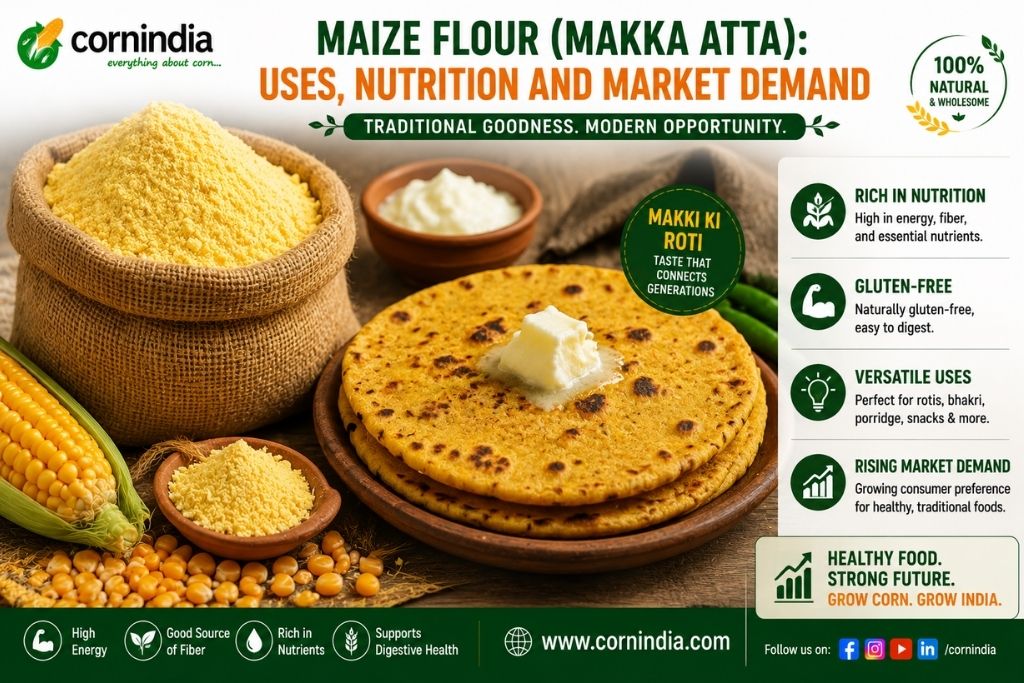
Walk into any Punjabi or Rajasthani kitchen in winter, and you'll likely find a bag of makka atta sitting next to the wheat atta. It's the flour behind makki ki roti — the golden, slightly crumbly flatbread that pairs with sarson da saag and a generous dollop of white butter.
For generations, that's mostly what makka atta meant in India: a seasonal, regional staple. But something has shifted in the last few years. Maize flour has quietly become one of the fastest-growing categories in India's packaged food aisle — driven by gluten-free diets, health-conscious urban consumers, and a food processing industry that has discovered dozens of new uses for it.
This post covers both sides of that story: what makka atta actually offers nutritionally and how people use it, and what's happening in the business behind it — because both halves of this story are moving fast right now.
What Exactly Is Makka Atta?
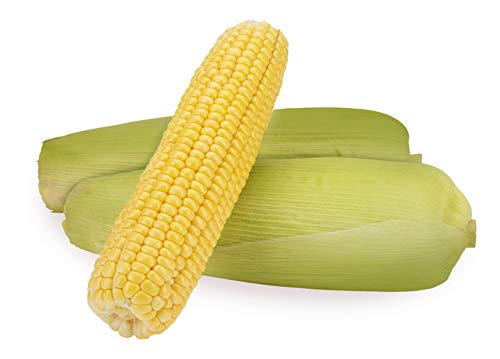
Maize flour — makka atta in Hindi, makki da atta in Punjabi — is made by grinding dried maize kernels into a fine powder. It's different from cornstarch (which is a refined starch extract) and different from cornmeal in some markets (which is more coarsely ground). Indian makka atta is typically stone-ground or chakki-milled from whole dried maize kernels, retaining the bran and germ — which is exactly what makes it nutritionally interesting.
In a 100g serving, maize flour contains around 300 calories, 63g of total carbohydrates, 10g of dietary fibre, and 6g of protein, along with essential minerals like phosphorus and magnesium.
The Nutrition Story
Naturally gluten-free
This is the single most important fact about makka atta from a health perspective. Maize flour is completely gluten-free, which removes the possibility of autoimmune reactions or inflammation caused by gluten. With coeliac disease and gluten intolerance rising worldwide, makki ka atta offers a healthy, safe, and natural substitute for wheat and other gluten-containing grains.
In India specifically, gluten intolerance and celiac disease affect approximately 6–8 million people — a population for whom naturally gluten-free grains like maize aren't a lifestyle trend, but a genuine dietary necessity.
Rich in fibre and slow-digesting carbohydrates
Unlike refined flours, makka atta digests slowly, providing a sustained release of energy without sudden blood sugar spikes. It is known for having a lower Glycemic Index compared to conventional wheat, making it a favourable choice for those managing blood sugar levels and heart health.
The insoluble dietary fibre in makki ka atta is important for intestinal health — the roughage adds volume to stool, which facilitates healthy bowel movements.
A genuine source of B-vitamins and minerals
B-complex vitamins — including B6, niacin, riboflavin, and folate — are abundant in makki ka atta and are essential for brain function and energy metabolism. It's also a good source of phosphorus, calcium, and magnesium, along with iron and zinc that support energy levels and metabolic function.
Antioxidants and eye health
Whole maize flour is naturally rich in carotenoids like lutein and zeaxanthin, which are essential for maintaining healthy vision. It also contains significantly higher antioxidant levels than conventional wheat flour, helping neutralise free radicals and support immune function.
Heart health support
Phytosterols present in maize flour help prevent the intestines from absorbing cholesterol, which can lower total cholesterol levels and reduce the risk of atherosclerosis, heart attacks, and strokes.
How it compares to wheat atta
The honest comparison: makka atta and wheat atta aren't nutritional rivals so much as different tools for different needs.
| Factor | Makka Atta (Maize Flour) | Wheat Atta |
|---|---|---|
| Gluten | None — naturally gluten-free | Contains gluten |
| Glycemic Index | Lower | Higher |
| Fibre | High (whole grain, unrefined) | High (in whole wheat) |
| Protein | Moderate (6g/100g) | Higher, with gluten proteins |
| Roti texture | Crumbly, needs warm water/technique | Elastic, easy to roll |
| Traditional use | Seasonal, regional (winter, North India) | Daily staple, pan-India |
| Best for | Gluten-free diets, blood sugar management | General daily use, dough-based cooking |
The trade-off that keeps makka atta from being a daily replacement for most Indian households is texture — gluten is what gives wheat dough its elasticity and stretch. Maize flour, lacking gluten, produces a denser, more crumbly roti that requires more skill (and usually a mix of hot water and a heavier hand) to shape well. This is exactly why makki ki roti has traditionally been thicker and shaped by hand-patting rather than rolled with a rolling pin.
Traditional and Modern Uses
Makki ki roti: The most iconic use — a thick, hand-shaped flatbread traditionally paired with sarson da saag, jaggery, and white butter across Punjab, Haryana, and parts of Rajasthan and Himachal Pradesh.
Porridge and khichdi-style preparations: In several regional cuisines, coarsely ground maize flour is cooked into a warm porridge, similar to how cornmeal is used in polenta or grits internationally.
Thickening agent: A finer grade of maize flour is used in Indian kitchens to thicken curries, soups, and gravies — a role it shares with cornstarch, though the two are technically different products.
Baked goods: As gluten-free baking has grown in India's urban markets, maize flour has found its way into gluten-free bread, muffins, and biscuits — either alone or blended with other gluten-free flours like rice or jowar.
Snacks: Corn flour is a base ingredient in many packaged snack foods — chips, namkeen coatings, and extruded snacks — where its texture and colour make it a popular choice for manufacturers.
Dosas and chillas: Some regional recipes incorporate maize flour into savoury pancake-style preparations, often blended with rice flour or besan for better binding.
The Business Side: A Market Growing Faster Than Most People Realise
This is where the story shifts from kitchen to commerce — and where the numbers get genuinely interesting for agri-businesses.
The size of the opportunity
The India corn flour market reached a size of USD 1.47 billion based on five-year historic analysis, with continued substantial growth expected over the next five years.
Globally, the picture is even larger and faster-growing: the global corn flour market was valued at USD 21.89 billion in 2024 and is projected to reach USD 45.16 billion by 2035, growing at a CAGR of 6.8%. Another estimate puts the corn flour market at USD 20.6 billion in 2025, projected to reach USD 37.9 billion by 2035 — with global corn flour consumption growing 14% year-on-year and Asia-Pacific among the fastest-growing regions.
Within India's broader flour market, overall growth is projected at a CAGR of around 8% between 2025 and 2031, with maize as one of the tracked raw material segments alongside wheat and rice.
What's driving the growth
Gluten-free demand is the single biggest tailwind. The gluten-free packaged food segment in India has registered nearly 20–25% annual growth in recent years, and domestic corn flour producers have responded by expanding product lines and increasing retail distribution across supermarkets, online platforms, and specialty health-food stores nationwide.
Corn-based snacking is surging. India's urban population surpassed 500 million by 2024, driving increased snack food consumption. Production volume of corn-based snacks — tortilla chips, nachos, taco shells — has surged by around 15–18% annually, with manufacturers introducing over 50 new corn-based snack products in 2024 alone.
Ethanol policy is reshaping the raw material equation. India's ethanol-blending policy significantly escalated domestic corn consumption, utilising approximately 3.5 million tonnes of corn to produce 1.35 billion litres of ethanol in 2024 — nearly fourfold growth compared to 2023. This diversion of corn has tightened domestic supply, pushing corn prices up by about 25–30%, directly influencing raw material costs across corn-dependent sectors including corn flour production. This is an important and somewhat counterintuitive dynamic: rising ethanol demand is a growth driver for maize farmers, but a cost pressure for flour and food processors competing for the same grain.
Health positioning beyond gluten-free. In nutritional testing, high-quality corn flour delivers up to 12% protein content and 7–9% fibre compared to refined wheat flour's 10–11% protein and just 2–3% fibre. Products formulated with corn flour help achieve texture and taste profiles comparable to wheat-based products while reducing glycemic impact by up to 25%. This is opening doors beyond the gluten-free niche into the broader "healthier alternative" positioning that appeals to a much larger consumer base.
Where the raw material comes from
Major corn-producing states such as Karnataka, Andhra Pradesh, and Maharashtra play a significant role in the corn flour market due to their favourable agro-climatic conditions and established agricultural infrastructure, contributing substantially to raw material supply and ensuring steady production and distribution of corn flour across the country.
Quality standards to know
FSSAI mandates strict quality standards for maize (corn) flour in India, including moisture content below 14%, ash content under 1.25%, and 98% particle passage through a specified mesh size. For agri-businesses entering this space, compliance with these standards from day one is essential — both for market access and for building buyer trust with larger retail and food service accounts.
The challenges worth knowing about
The maize processing industry in India faces technical challenges related to the adoption of advanced technologies and processes. Prior to technological advancements, industries depended on imported maize, which was costly and hindered industrial growth. Continuous technological upgrades remain necessary to maintain competitiveness.
There is also a shortage of adequately trained professionals in flour milling, with the industry requiring a skilled workforce to operate advanced machinery and adhere to food safety standards outlined by FSSAI's Food Safety Management System guidance.
Where the growth is headed
Product innovation is accelerating fast in this category. Recent global trends include flavoured maize flour variants — spicy, herbed, protein-enriched blends — growing 31.7% year-on-year, alongside rising demand for stone-ground, non-GMO maize flour and expansion of private-label maize flour products in retail. In 2025, maize flour continues to gain traction as a popular, nutritious, and satisfying choice for rotis, porridge, pancakes, and other dishes among consumers pursuing gluten-free diets for health reasons or lifestyle choices. These are exactly the innovation patterns Indian D2C food brands and regional millers are beginning to replicate — flavoured makka atta blends, stone-ground "heritage" positioning, and organic certification are all early-stage but active trends in the domestic market.
What This Means, Practically
For consumers: Makka atta is genuinely one of the better naturally gluten-free flour options available in Indian kitchens — nutritionally comparable or superior to wheat atta on several measures (fibre, antioxidants, glycemic index), while being completely safe for anyone managing celiac disease or gluten sensitivity. It won't replace wheat atta as a daily staple for most households due to the texture and rolling difference, but as a regular rotation item — a few times a week, or as the flour of choice for someone managing blood sugar or gluten intolerance — it earns its place convincingly.
For agri-businesses: The maize flour category sits at an interesting intersection of rising raw material costs (from ethanol competition) and rising consumer demand (from gluten-free and health trends) — which means margin discipline and quality positioning matter more than ever. The clearest opportunities are in branded, quality-certified maize flour targeting the gluten-free and health-conscious retail segment, where price sensitivity is lower and the willingness to pay for stone-ground, organic, or fortified positioning is genuinely present. Entrants who can combine reliable non-GMO, quality-tested raw maize sourcing with modern milling and retail-ready packaging are well positioned in a market still dominated by unbranded, loose atta sold through traditional chakkis.
Final Thoughts
Makka atta has always had a place in Indian kitchens — but it's no longer just a seasonal, regional specialty. It's becoming a mainstream health food category, backed by a market that's genuinely growing, and increasingly recognised for nutritional properties that go well beyond "it's what we eat in winter."
For consumers, that means more variety, better quality, and wider availability of a naturally gluten-free flour with real nutritional substance. For agri-businesses, it means a raw material — maize — that's finding yet another high-value pathway from farm to finished product, alongside feed, starch, and ethanol.
At CornIndia, we track every part of the maize value chain, from cultivation to consumer products. If you're a consumer curious about incorporating makka atta into your diet, or a business exploring the maize flour opportunity, we're here to help you navigate it.
Related reads on CornIndia: What is Maize? India's Most Versatile Crop Explained | Maize Starch Industry in India: Size, Players and Growth | Quality Protein Maize (QPM): The Nutrition Story No One Tells




0 Comments