
Sweet corn has an image problem. Ask around, and you'll hear some version of the same three complaints: it's basically sugar, it's "just a starch," and it's not real nutrition — more of a treat than a vegetable.
None of that holds up against the actual nutrition data. Sweet corn is a genuinely nutrient-dense food — rich in fibre, vitamins, minerals, and a specific category of antioxidants that few other common vegetables can match. This post walks through exactly what's in a serving of sweet corn, addresses the misconceptions directly, and puts its nutrition profile side-by-side with other vegetables you already trust.
What's Actually in Sweet Corn
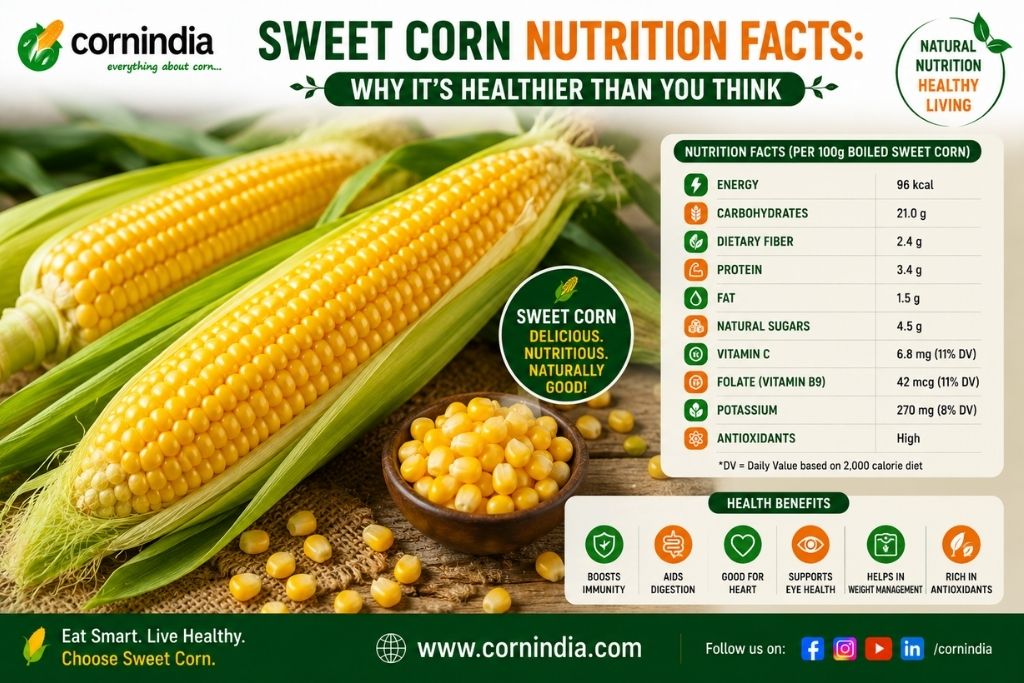
Let's start with the numbers. 100 grams of sweet corn kernels provide 86 calories, 6.8 mg of Vitamin C (11% of daily value), 187 IU of Vitamin A, 42 mcg of folic acid, and 37 mg of magnesium.
A 100-gram serving also contains approximately 3.2 grams of protein and 2.7 grams of dietary fibre — roughly 2 grams of fibre per medium cob, which supports gut health and digestive wellness.
Sweet corn also provides 275 milligrams of potassium per medium cob — a mineral where higher dietary intake has been linked to preventing high blood pressure and reducing the risk of fatty liver disease. Consuming sweet corn can meaningfully contribute toward the 2,600 milligram daily potassium recommendation for adults, helping reduce deficiency risk and chronic disease exposure.
Beyond the headline vitamins and minerals, sweet corn carries a set of plant compounds — phytochemicals — that deserve real attention:
Lutein and zeaxanthin: Yellow corn contains significant levels of phenolic flavonoid pigment antioxidants such as beta-carotenes, lutein, xanthins, and cryptoxanthin — compounds that, together with Vitamin A, help maintain healthy mucous membranes, skin, and vision. Higher intakes of lutein and zeaxanthin increase macular pigment density and are associated with a decreased risk of macular degeneration — a leading cause of vision loss in older adults — as well as reduced cataract risk. These carotenoids also accumulate in the brain, where they're thought to have neuroprotective, antioxidant effects against oxidative damage.
Ferulic acid: Corn is a good source of the phenolic flavonoid antioxidant ferulic acid. Research suggests ferulic acid plays a role in preventing cancers, ageing, and inflammation in the body.
Folate (Vitamin B9): Folate is a key essential vitamin for supporting healthy pregnancies. A 2023 systematic review of 24 large observational studies, covering more than 6.1 million participants, found that high folate intake compared to low intake was associated with a 12% reduced relative risk of colorectal cancer.
B-complex vitamins broadly: Sweet corn contains good levels of B-complex vitamins including thiamin, niacin, pantothenic acid, folate, riboflavin, and pyridoxine — many of which function as co-factors for enzymes involved in metabolising food into usable energy.
Myth-Busting: "Isn't Corn Just Sugar and Starch?"
This is the misconception that does the most damage to sweet corn's reputation, so it's worth addressing directly.
The myth: Sweet corn is mostly simple sugar and starch, offering little real nutritional value beyond calories.
The reality: Sweet corn contains 19g of carbohydrates per medium ear, which is moderate compared to other starchy vegetables — and corn's carbs are mostly complex starches combined with fibre, making them meaningfully healthier than the refined carbohydrates found in white bread or pastries.
The fibre content is the key detail the myth ignores. The fibre in a medium ear of sweet corn — around 2.4 grams — supports digestive wellness and helps with blood sugar control, because fibre slows the digestion and absorption of the carbohydrates alongside it, preventing the rapid blood sugar spikes associated with refined carbs.
Myth-Busting: "Sweet Corn Is Bad for Diabetics"
This is a more specific — and more consequential — misconception, so it deserves careful treatment.
The myth: Because sweet corn tastes sweet and is starchy, it should be avoided by anyone managing blood sugar or diabetes.
The reality: For a 100-gram serving, sweet corn's glycemic index (GI) is approximately 55 — categorising it as a moderate-GI food, not a high-GI one. Fresh sweet corn has a medium glycemic index that is actually lower than many commonly consumed high-glycemic breads and cereals that people don't think twice about eating.
With a GI in the low-to-medium range, sweet corn is generally considered safe for diabetics in moderation. The fibre content helps control blood sugar response, and best practices include eating half an ear rather than a whole one, pairing it with a protein source, choosing boiled corn over buttered or heavily salted versions, and monitoring your individual blood sugar response, since responses can vary between individuals.
This context matters because of what high-GI, high-glycemic-load eating patterns are actually associated with. Diets high in glycemic index and glycemic load are associated with increased incidence of type 2 diabetes, cardiovascular disease, diabetes-related cancer, and all-cause mortality, as well as elevated markers linked to Alzheimer's disease risk. Sweet corn, sitting at a moderate GI of around 55, is nowhere near the high-risk end of that spectrum — a fact that gets lost when people lump "starchy" and "high-GI" together as if they mean the same thing. They don't.
One caveat worth flagging honestly: Canned sweet corn is typically packed in salted water, giving it a notably higher sodium content than fresh corn — an unprocessed cob or a "no added salt" canned version has minimal sodium by comparison. If you're managing blood pressure or sodium intake, checking the label on canned corn (or opting for fresh/frozen) is a smart, simple habit.
Myth-Busting: "It's Not a Real Vegetable — It's More Like a Treat"
The myth: Because sweet corn tastes noticeably sweet compared to leafy greens or cruciferous vegetables, it doesn't belong in the same category — it's closer to a starchy indulgence than a genuine vegetable.
The reality: Sweet corn is low in fat and rich in dietary fibre, folate, minerals, and potassium — nutrients important for maintaining good heart health and combating many chronic disease risks. It's also a good source of carotenoids that support healthy vision, reduce the risk of degenerative eye diseases, improve blood cholesterol, and lead to better cognitive function. The article summarising this research puts it plainly: considering all these health benefits, hold the guilt — sweet corn earns its place on your plate.
How Sweet Corn Stacks Up Against Other Vegetables
Numbers mean more in context. Here's how sweet corn compares to a few vegetables people commonly consider "healthier" by default:
| Vegetable (per 100g) | Calories | Fibre | Standout nutrient |
|---|---|---|---|
| Sweet corn | 86 | 2.7g | Lutein + zeaxanthin (eye health), folate |
| Broccoli | ~34 | 2.6g | Vitamin C, Vitamin K, sulforaphane |
| Potato (boiled, no skin) | ~87 | 1.8g | Potassium, Vitamin B6 |
| Carrot | ~41 | 2.8g | Beta-carotene (Vitamin A) |
| Green peas | ~81 | 5.7g | Protein, fibre |
A few honest observations from this comparison:
Sweet corn's calorie count is comparable to potato — but sweet corn delivers meaningfully more fibre per 100g than boiled potato, along with a broader spread of B-vitamins and a genuinely distinctive antioxidant profile (lutein and zeaxanthin) that potato simply doesn't offer in comparable amounts.
Broccoli wins on Vitamin C and is lower calorie — no argument there. But sweet corn isn't trying to be broccoli; its nutritional strength lies specifically in its carotenoid content for eye health and its folate content, areas where broccoli is comparatively unremarkable.
Green peas actually beat sweet corn on fibre and protein — a fair and useful comparison, since peas and corn are often mentally grouped together as "similar" vegetables. If fibre and protein density are your top priority, peas have a real edge.
The honest takeaway: sweet corn isn't nutritionally superior to every vegetable on this list — no single vegetable is. But it holds its own credibly against foods with a stronger "health halo," and its specific strength — lutein and zeaxanthin for eye and brain health, plus folate — is a genuine nutritional asset that few other commonly eaten vegetables match in similar quantity.
Who Benefits Most from Eating Sweet Corn Regularly
Anyone interested in general wellness: The combination of fibre, B-vitamins, potassium, and antioxidant carotenoids makes sweet corn a solid, unremarkable-in-the-best-way addition to a balanced diet — the kind of food that doesn't need a dramatic health claim to earn its place.
People managing blood pressure: Sweet corn's potassium content — 275mg per medium cob — contributes meaningfully toward the daily intake associated with preventing high blood pressure.
People thinking about eye health, especially as they age: The lutein and zeaxanthin content is genuinely one of sweet corn's most distinctive nutritional features, with a growing body of research linking these specific carotenoids to reduced risk of macular degeneration and cataracts.
Pregnant women: Folate's role in healthy foetal development makes sweet corn a useful, easy-to-include dietary source during pregnancy — alongside other folate-rich foods, not as a replacement for prenatal vitamins.
People managing blood sugar, in moderation: As covered above, sweet corn's moderate GI and fibre content mean it doesn't need to be excluded from a diabetes-conscious diet — moderation and preparation method (boiled, not fried or heavily buttered) are what matter most.
How You Prepare It Matters As Much As the Corn Itself
A final, important point: sweet corn's health profile can be undermined entirely by how it's cooked and served.
Boiled sweet corn is generally the healthiest preparation, as it keeps the nutritional value intact without added fats or sodium. Deep-fried corn fritters, corn slathered in excessive butter and salt, or corn syrup-sweetened processed products are a completely different nutritional proposition from a simply boiled or grilled cob — and it's unfair to sweet corn itself when these preparations get blamed on "corn" as an ingredient.
If you want the full nutritional benefit described in this post, the preparation method matters: boiled, steamed, or grilled with modest seasoning preserves everything good about sweet corn. Heavy butter, deep-frying, or corn-syrup-based processed snacks are where the "unhealthy" reputation actually comes from — and that reputation shouldn't be pinned on the vegetable itself.
Final Thoughts
Sweet corn's reputation problem comes down to a simple confusion: people conflate "tastes sweet" with "nutritionally empty," and conflate "starchy" with "unhealthy." Neither holds up against the actual data. A 100-gram serving delivers real fibre, meaningful folate, genuinely distinctive eye-health antioxidants in lutein and zeaxanthin, useful potassium for blood pressure management, and a moderate glycemic index that doesn't deserve the high-GI reputation it sometimes gets lumped into.
It's not nutritionally superior to every vegetable in the produce aisle — no single food is. But dismissed as "just sugar and starch," sweet corn is genuinely underrated. Eaten simply — boiled, grilled, or steamed — it earns a regular place in a healthy diet, not as a guilty indulgence, but as an actual nutritional contributor.
At CornIndia, we cover every angle of maize — from the farms that grow it to what's actually on your plate. If you're looking for ways to enjoy sweet corn, check out our recipe collection for quick, healthy ways to prepare it.
Related reads on CornIndia: 5 Healthy Sweet Corn Recipes You Can Make in 15 Minutes | Sweet Corn vs Field Corn: What's the Real Difference? | What is Maize? India's Most Versatile Crop Explained






0 Comments