
Sweet corn has a way of making everything feel better.
It's the bhutta on the roadside on a rainy evening. The pop of colour in a salad. The thing that turns a bowl of poha from ordinary to something you look forward to. And somehow, despite how good it tastes, it's also genuinely good for you — which puts it in a rather elite group of foods.
A 100g serving of sweet corn provides 86 calories, along with Vitamin C, Vitamin A, folate, and magnesium - a solid nutritional package for a vegetable that takes less than 10 minutes to cook. Sweet corn is low in fat and rich in dietary fibre, folate, and potassium — potassium being important for maintaining good heart health and combating many chronic disease risks. Sweet corn is also a good source of certain carotenoids that support healthy vision, reduce the risk of degenerative eye diseases, improve blood cholesterol, and lead to better cognitive function.
The five recipes below are all under 15 minutes from start to finish, use ingredients you almost certainly already have at home, and are genuinely healthy — not the kind of "healthy" that involves complicated substitutions or leaving out all the flavour.
Let's get into it.
A Quick Word on Getting Your Sweet Corn Ready
Before the recipes, one practical note: most of these work equally well with fresh sweet corn kernels (cut off the cob), frozen sweet corn (thawed), or canned sweet corn kernels (drained and rinsed).
For fresh corn: boil the whole cob for 5–7 minutes in lightly salted water, let it cool slightly, then run your knife down the cob to cut the kernels loose. That's your base for every recipe below.
For frozen or canned: simply thaw or drain, and you're ready.
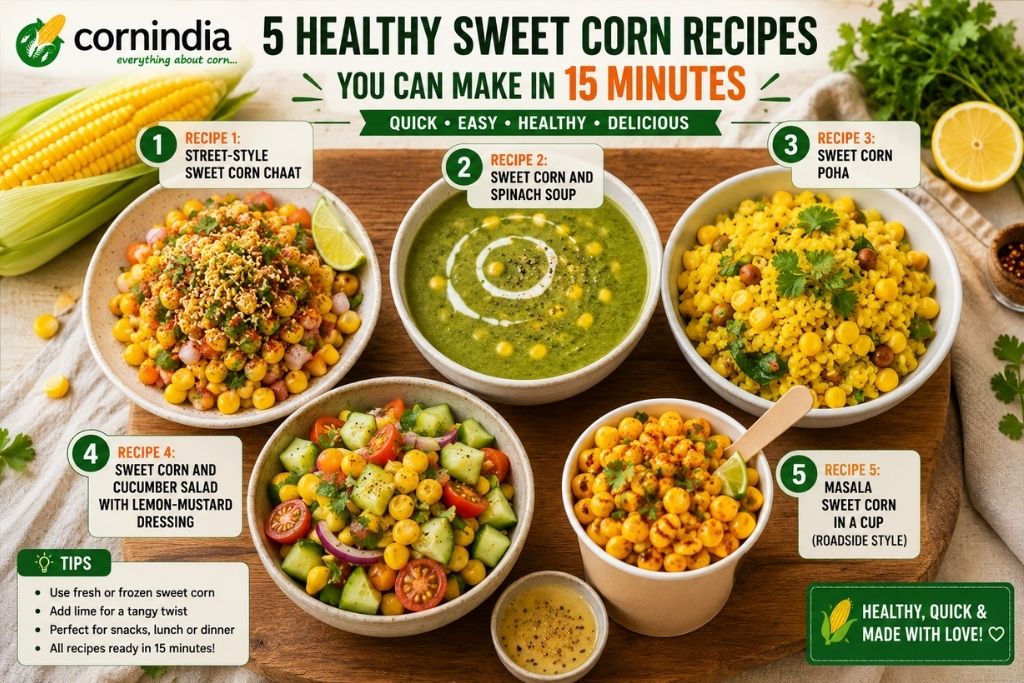
Recipe 1: Street-Style Sweet Corn Chaat
The Indian street food classic, made at home in 10 minutes. This is the one that disappears in 30 seconds whenever you make it for company.
Time: 10 minutes | Serves: 2 | Calories: ~180 per serving
Ingredients:
- 2 cups sweet corn kernels (boiled or frozen, thawed)
- 1 small onion, finely chopped
- 1 small tomato, finely chopped
- 1 green chilli, finely chopped (skip or reduce if making for children)
- 2 tbsp fresh coriander (dhania), chopped
- Juice of 1 lime
- ½ tsp chaat masala
- ¼ tsp roasted cumin powder (jeera powder)
- Salt to taste
- Optional: 2 tbsp grated paneer or pomegranate seeds for topping
Method:
- If using fresh corn, boil the kernels for 4–5 minutes in salted water. Drain and set aside. If using frozen, simply thaw and pat dry.
- In a mixing bowl, combine the warm corn kernels with chopped onion, tomato, green chilli, and coriander.
- Add lime juice, chaat masala, roasted cumin powder, and salt. Toss everything well.
- Taste and adjust — more lime if you want it tangier, more chaat masala if you want more punch.
- Serve immediately in small bowls or cups, topped with grated paneer or pomegranate seeds if using.
Why it's good for you: This is essentially vegetables with a squeeze of lime — no oil, no heavy dressing, no added sugar. The fibre from the corn keeps you full, the lime provides Vitamin C, and the chaat masala adds flavour without calories. If you're reaching for this instead of fried snacks, you're making a genuinely good call.
Make it ahead: Chop your onions, tomato, and coriander and keep them in the fridge. When you need a quick snack or starter, toss with freshly boiled or thawed corn and season — done in 5 minutes.
Recipe 2: Sweet Corn and Spinach Soup
Light, warming, and perfect for monsoon evenings. This is nothing like the thick, cornflour-heavy restaurant version — it's clear, clean, and deeply flavourful.
Time: 15 minutes | Serves: 3–4 | Calories: ~120 per serving
Ingredients:
- 1½ cups sweet corn kernels
- 1 cup baby spinach (or regular spinach, roughly chopped)
- 4 cups water or light vegetable stock
- 1 medium onion, finely chopped
- 3 garlic cloves, minced
- 1 tsp olive oil or light cooking oil
- ½ tsp black pepper
- 1 tsp soy sauce (optional, for umami depth)
- Salt to taste
- Fresh coriander and a squeeze of lime to finish
Method:
- Heat oil in a deep pan on medium flame. Add chopped onion and garlic, sauté for 2–3 minutes until soft and translucent.
- Add sweet corn kernels and stir for 1 minute.
- Pour in the water or vegetable stock. Bring to a gentle boil.
- Using the back of a ladle or a small masher, lightly crush about a quarter of the corn kernels against the side of the pan — this naturally thickens the soup without needing any cornflour.
- Add spinach and let it wilt — about 1 minute. Season with salt, pepper, and soy sauce if using.
- Finish with fresh coriander and a squeeze of lime. Serve hot.
Why it's good for you: This soup delivers fibre from the corn, iron and folate from the spinach, and barely any fat. The natural starch from the crushed kernels thickens the soup without any processed additives. It's a full serving of vegetables in a bowl that takes no more effort than making chai.
Tip: Add a beaten egg whisked in slowly at Step 5 (the Chinese egg-drop method) for extra protein and a slightly richer texture — still light, still under 15 minutes.
Recipe 3: Sweet Corn Poha
Poha just got an upgrade. The sweetness of the corn balances the savoury-sour poha beautifully, and the colour alone will make this a new household regular.
Time: 12 minutes | Serves: 2 | Calories: ~250 per serving
Ingredients:
- 1½ cups thick poha (flattened rice)
- ¾ cup sweet corn kernels (boiled or frozen, thawed)
- 1 medium onion, thinly sliced
- 1 green chilli, slit
- 8–10 curry leaves
- ½ tsp mustard seeds
- ¼ tsp turmeric powder
- Juice of ½ lime
- 1 tsp oil
- Salt to taste
- Fresh coriander and grated fresh coconut to garnish (optional)
Method:
- Rinse the poha in a colander under running water for 30 seconds. Drain well and set aside. It will soften on its own — don't soak it.
- Heat oil in a pan. Add mustard seeds and let them splutter. Add curry leaves and green chilli, sauté for 30 seconds.
- Add sliced onion and cook for 3–4 minutes until soft and slightly golden.
- Add sweet corn kernels and turmeric. Stir and cook for 2 minutes.
- Add the drained poha and mix gently so everything is combined and coated with the turmeric. Season with salt.
- Cook for 2–3 minutes on low-medium flame, stirring occasionally. Add lime juice and toss.
- Serve hot, garnished with coriander and coconut if using.
Why it's good for you: Poha is a light, low-fat, easily digestible carbohydrate. Adding sweet corn boosts the fibre content, adds natural sweetness, and improves the overall nutritional profile compared to plain poha. The turmeric provides anti-inflammatory compounds, and using just 1 tsp of oil keeps the fat content minimal. This is a complete, balanced Indian breakfast or light meal.
Recipe 4: Sweet Corn and Cucumber Salad with Lemon-Mustard Dressing
This one is for the days when you want something completely light, crisp, and refreshing. It's also the recipe you'll be asked to bring to every potluck once people taste it.
Time: 10 minutes | Serves: 2–3 | Calories: ~140 per serving
Ingredients:
For the salad:
- 1½ cups sweet corn kernels (boiled or thawed)
- 1 medium cucumber, diced
- 1 small red onion, finely sliced
- 1 medium carrot, grated or julienned
- 2 tbsp fresh coriander, chopped
- Optional: handful of rocket/lettuce leaves, or roasted peanuts for crunch
For the lemon-mustard dressing:
- Juice of 1 lemon
- 1 tsp Dijon mustard (or regular Indian mustard paste)
- 1 tsp honey or jaggery (optional — balances the tang)
- 1 tbsp olive oil
- Salt and black pepper to taste
Method:
- Whisk together all the dressing ingredients in a small bowl until combined. Taste — it should be tangy, slightly sweet, and lightly sharp from the mustard.
- In a large bowl, combine the corn, cucumber, red onion, carrot, and coriander.
- Pour the dressing over the salad and toss well to coat.
- Serve immediately for the freshest crunch, or refrigerate for up to an hour (the vegetables soak up the dressing beautifully).
- Add roasted peanuts just before serving if using — they lose their crunch if added early.
Why it's good for you: This salad is a genuinely low-calorie, high-volume dish — the kind of thing you can eat a large bowl of and feel satisfied without consuming a lot of calories. Sweet corn provides folate, which supports foetal development, and its fibre content helps manage common digestive concerns. Combined with the hydrating cucumber and nutrient-dense carrots, this is one of the more nutritionally complete quick salads you can put together from pantry staples.
Make it a meal: Add a tin of chickpeas or sliced boiled eggs to turn this into a protein-rich lunch that keeps you full for hours.
Recipe 5: Masala Sweet Corn in a Cup (Roadside Style)
This is the recipe that Indian street food stalls have perfected for decades — simple, bold, satisfying, and ready in under 5 minutes once your corn is boiled. The kind of thing you want at 4pm with a cup of chai.
Time: 5 minutes (+ 7 minutes to boil corn if starting from scratch) | Serves: 2 | Calories: ~165 per serving
Ingredients:
- 2 cups sweet corn kernels, freshly boiled and still warm
- 1 tsp butter (optional — skip for a fully oil-free version)
- ½ tsp chilli powder (adjust to taste)
- ½ tsp chaat masala
- ¼ tsp black salt (kala namak — this is what gives street corn its distinctive flavour; regular salt works too)
- Juice of 1 lime
- 2 tbsp fresh coriander, roughly chopped
Method:
- While the corn is still warm (this is important — warm corn absorbs the flavours best), place kernels in a bowl.
- If using butter, add it immediately so it melts into the warm corn.
- Add chilli powder, chaat masala, black salt, and lime juice. Toss well.
- Finish with fresh coriander. Serve immediately in cups or small bowls.
That's it. Five ingredients (excluding the optional butter), zero cooking beyond boiling the corn, and the result is the flavour of monsoon street food at home.
Why it's good for you: Boiled sweet corn is generally the healthiest choice as it keeps the nutritional value intact without added fats or sodium. With just a squeeze of lime and spices (no oil, no deep-frying, no heavy sauces), this is about as clean a snack as you can find with this much flavour. The lime adds Vitamin C, the coriander adds antioxidants, and the black salt provides that distinctive tangy depth without adding significant sodium.
Children's version: Skip the chilli powder and green chilli, use just chaat masala and lime, and add a tiny knob of butter. It's the perfect after-school snack — naturally sweet, fun to eat, and infinitely healthier than chips or biscuits.
Buying and Storing Sweet Corn: Quick Tips
Before you head to the market, a few things that will make a real difference to how these recipes taste:
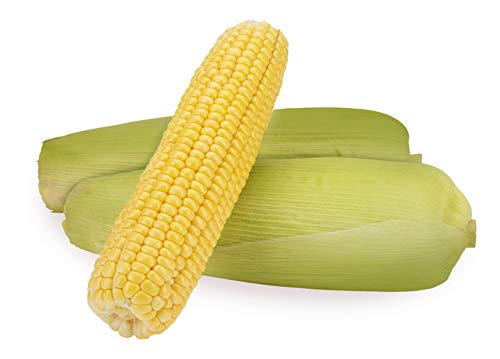
Buying fresh corn: Look for husks that are tightly wrapped, bright green, and slightly moist. The silk at the top should be golden-brown and slightly sticky — not dry or black. The tip of the cob should feel full when you press it through the husk. Avoid cobs with yellowing husks, loose kernels, or gaps at the tip.
Storing it: Fresh sweet corn is best used within 24 hours of purchase — the natural sugars start converting to starch quickly after harvest, which reduces sweetness. If you can't use it immediately, refrigerate it (husks on) and use within 2–3 days.
Frozen sweet corn: A perfectly good alternative for any of these recipes. The corn is frozen at peak sweetness shortly after harvest, so it retains flavour and nutrition well. It's also available year-round, which makes it a useful pantry staple.
One Last Thing
Sweet corn is one of those ingredients that earns its place in a healthy diet not through dramatic health claims, but through quiet, everyday reliability. It can be a healthier alternative to processed snacks when prepared simply — and as these five recipes show, "simply" doesn't have to mean boring.
From a monsoon evening chaat to a crisp workday salad, sweet corn adapts to every meal and mood. Keep some in your freezer, pick up fresh cobs when they're in season, and let these recipes become your regulars.
At CornIndia, we celebrate every form of maize — from farm to fork. Browse our site for more on sweet corn and all varieties of Indian corn.
Related reads on CornIndia: What is Maize? India's Most Versatile Crop Explained | Sweet Corn vs Field Corn: What's the Real Difference? | How to Grow Sweet Corn in India







0 Comments