
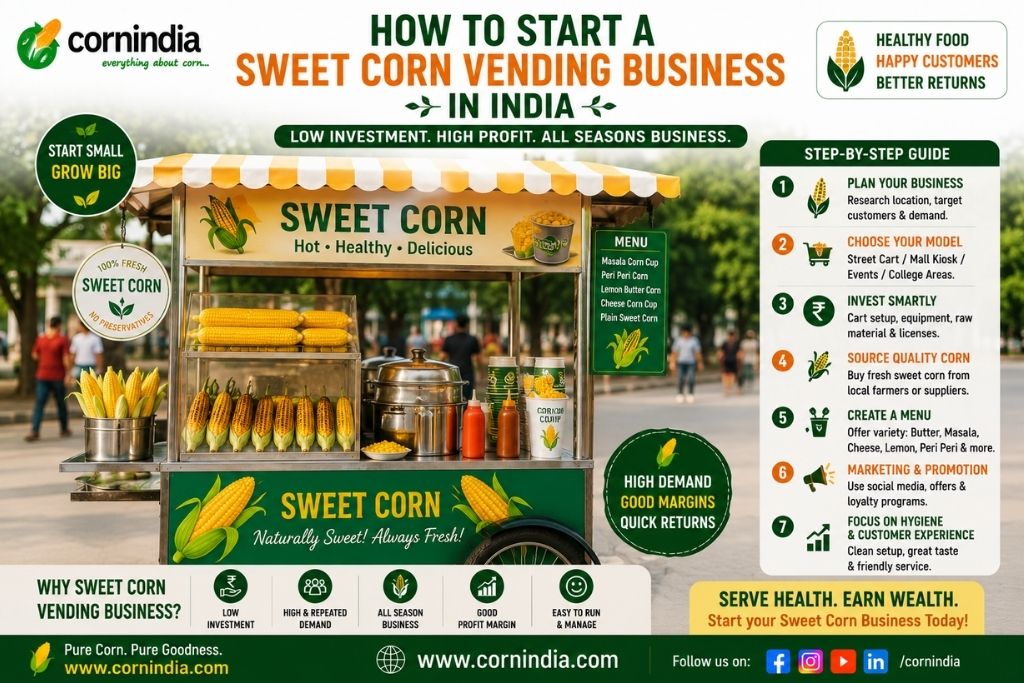
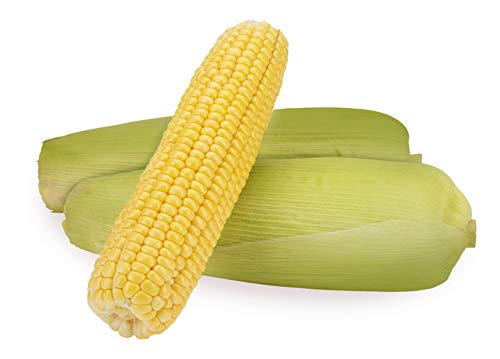
Walk past any busy street corner, railway station, or shopping mall in India during the evening rush, and you'll likely spot a corn vendor — a small cart with a coal brazier and roasted bhutta, or a proper kiosk steaming and buttering corn for a queue of customers. It's one of the most enduring small-business categories in Indian street food, and for good reason: sweet corn works well as a business because it is easy to prepare, affordable for customers, and suitable for both street food and packaged food formats.
This guide walks through both routes into this business — the low-investment street cart model and the more organised kiosk format — with real numbers, the licensing you actually need, and an honest picture of what return you can expect.
Why Sweet Corn Vending Works as a Business
A few structural advantages make this category genuinely attractive for a first-time small business owner:
Low barrier to entry. Unlike most food businesses, you don't need a commercial kitchen, elaborate storage, or years of culinary training. The product itself — sweet corn — does most of the work.
Strong, repeatable demand. Corn has been a fixture of Indian street food for generations, particularly in monsoon and winter months when hot, freshly cooked corn has natural seasonal appeal. It also works year-round in malls and cinemas with steamed, buttered, or masala preparations.
High margin potential relative to investment. Raw sweet corn cobs are inexpensive relative to what a prepared, seasoned cob sells for — the value-add from cooking, buttering, and seasoning is where the margin lives, and it's a genuinely high-margin category once your basic setup is in place.
Two distinct scale paths. You can start small with a single cart for under ₹15,000, or build toward an organised, branded kiosk model that can eventually franchise or multiply across locations — many small entrepreneurs start with a food cart and later expand into a full brand.
Model 1: The Street Cart / Roadside Bhutta Stall
This is the classic, lowest-investment entry point — a mobile cart, a coal or gas-fired roasting setup, and a location with reliable foot traffic.
What you need to get started
The cart itself: A basic hand-pushed or cycle-mounted vending cart with a roasting grill or steaming unit. Second-hand or locally fabricated carts from a local welder/fabricator are significantly cheaper than pre-built commercial units.
Roasting/steaming setup: Either a coal-fired grill (traditional roasted bhutta style) or a steamer unit (for boiled/steamed corn, common in kiosk-style operations). Coal-fired setups have lower equipment cost but higher recurring fuel cost; steamers cost more upfront but are faster and more consistent.
Raw material: Fresh sweet corn cobs, sourced daily or every 2-3 days from your local mandi or a direct farmer relationship — freshness genuinely matters here, since older cobs lose sweetness and become starchy, which customers notice immediately.
Seasonings and condiments: Butter, lime, chaat masala, chilli powder, black salt — the same flavour principles covered in our popcorn and sweet corn recipe posts apply directly here, since flavour differentiation is one of the few ways a small cart stands out from another.
A location with consistent footfall: Near a school, a bus stop, a park entrance, a market junction, or a residential colony gate — somewhere people pass by regularly at the times you're operating (typically evenings).
Investment breakdown
| Item | Estimated cost |
|---|---|
| Vending cart (basic, locally fabricated) | ₹8,000 – ₹15,000 |
| Roasting grill / steaming unit | ₹2,000 – ₹6,000 |
| Initial raw material stock (corn, condiments) | ₹1,500 – ₹3,000 |
| Basic utensils, containers, packaging | ₹1,000 – ₹2,000 |
| FSSAI registration | Exempted / nominal |
| Total starting investment | ₹12,500 – ₹26,000 |
Daily economics
A single cart selling 100-150 cobs per day, at a typical retail price of ₹20-40 per seasoned cob (varying by city and location), with a raw cob cost plus condiments of roughly ₹8-15 per cob, gives you a gross margin in the range of 50-65% per cob sold. On 100 cobs at a conservative ₹25 average sale price with ₹12 cost, that's approximately ₹1,300 in daily gross profit, before accounting for fuel, transport, and your own time.
Realistic monthly income for a well-located single cart: roughly ₹15,000 – ₹30,000 net, after accounting for raw material, fuel/gas, minor repairs, and incidental costs — heavily dependent on footfall, location, and consistency of operation (weather, particularly monsoon rain, is a genuine disruptor for outdoor carts).
Model 2: The Organised Kiosk (Mall, Cinema, Food Court)
This is a meaningfully bigger step up — both in investment and in the level of organisation required — but it opens access to consistent indoor footfall, higher price points, and a more scalable, brandable business.
What's different from the street cart model
Fixed location with a lease or revenue-share arrangement. Malls, cinema complexes, and organised food courts typically require either a monthly rent or a revenue-share commission (commonly in the 15-25% range of sales) rather than the informal, no-rent arrangement of street vending.
Equipment steps up considerably. Electric steamers, display counters, proper hygiene setups (gloves, covered preparation areas), and often a small counter-top point-of-sale system for digital payments, which mall and cinema customers increasingly expect.
Branding matters more. A kiosk with a clean, consistent visual identity — signage, uniform staff attire, standardised packaging — earns more customer trust and repeat business in an organised retail environment than an anonymous cart does.
Higher price points, better margins per unit. Mall and cinema corn typically sells at a meaningful premium over street pricing — customers in these environments expect and accept higher prices for the convenience and environment, which improves your per-unit margin even after accounting for the rent/commission cost.
Investment breakdown
| Item | Estimated cost |
|---|---|
| Kiosk fit-out (counter, signage, display) | ₹80,000 – ₹2,00,000 |
| Electric steamer / cooking equipment | ₹15,000 – ₹40,000 |
| POS system, packaging, small equipment | ₹10,000 – ₹25,000 |
| Security deposit for mall/food court space | ₹50,000 – ₹1,50,000 (refundable, varies hugely by location) |
| Initial raw material and working capital | ₹15,000 – ₹30,000 |
| FSSAI State License + other registrations | ₹2,000 – ₹5,000 |
| Total starting investment | ₹1,70,000 – ₹4,50,000 |
This range varies enormously depending on the specific mall or food court's rent structure, city tier, and how elaborate your kiosk build is — a basic food-court counter costs far less than a dedicated branded kiosk with a premium mall placement.
Monthly economics
A well-located mall/cinema kiosk, selling a higher-margin product at ₹60-120 per serving with strong daily footfall (particularly around weekends and movie show timings), can realistically generate ₹40,000 – ₹1,20,000+ in monthly net profit once established — but this comes with materially higher fixed costs (rent/commission, staff wages if you're not running it solo) that a street cart doesn't carry.
Payback period: Given the higher upfront investment, expect a realistic payback period of 6-14 months for a kiosk model, compared to a street cart, which can often pay back its modest investment within 4-8 weeks of consistent operation.
Licensing and Registration: What You Actually Need
This is simpler than most first-time entrepreneurs expect, and recent reforms have made it easier still.
FSSAI registration is mandatory — but street vendors now get a real break. FSSAI registration fees have been exempted for 'Hawkers - Street Food Vendors' with effect from September 28, 2024. If you're already registered with your local Town Vending Committee under the Street Vendors Act, 2014, you're treated as "deemed registered" for FSSAI purposes and don't need to go through a separate FSSAI registration process — it's considered done automatically.
For a kiosk or larger operation, you'll need a State License, not just Basic Registration, once your turnover crosses the threshold. As of April 1, 2026, the turnover threshold for Basic Registration was raised from ₹12 lakh to ₹1.5 crore for most categories — meaning most single-cart or single-kiosk sweet corn businesses will comfortably fall under Basic Registration rather than needing a more involved State License. FSSAI license fees generally range from ₹100 to ₹7,500 per year depending on your business category and scale.
A genuinely useful recent change: FSSAI licenses now have perpetual validity. As of the March 2026 update, FSSAI licenses and registrations possess perpetual validity, meaning they remain valid indefinitely unless suspended, cancelled, or surrendered — Food Business Operators are no longer required to go through renewal cycles, provided they comply with annual fee payments and safety regulations. This removes what used to be a recurring administrative hassle for small vendors.
Other registrations to keep in mind:
- Business registration: A simple sole proprietorship is sufficient for a single cart or kiosk — no need for a private limited company at this scale
- GST registration: Only required if your annual turnover exceeds ₹20 lakh — most single-cart operations won't cross this threshold, but a busy multi-kiosk operation might
- Local municipal trade/health license: Required for fixed stalls and kiosks (less relevant for a mobile cart), issued by your local municipal body
- Mall/food court specific agreements: If going the kiosk route, you'll need a formal lease or licensing agreement with the mall or food court management — read the revenue-share terms carefully before committing
Financing Your Start: PM SVANidhi for Street Vendors
If you're starting with the street cart model, there's a specific government scheme designed exactly for this situation.
The PM Street Vendor's AtmaNirbhar Nidhi (PM SVANidhi) scheme offers collateral-free working capital loans in three tranches: the first tranche up to ₹15,000, the second up to ₹25,000 (available after timely repayment of the first), and the third up to ₹50,000 (available after timely repayment of the second).
Vendors also receive an interest subsidy and can access digital cashback incentives of up to ₹1,600 annually on retail and wholesale transactions made digitally, alongside a UPI-linked RuPay Credit Card available to those who've repaid their second loan on time.
As of April 2026, the scheme has disbursed cumulative loans of over ₹17,757 crore, and the lending period has been extended until March 31, 2030 — meaning this remains a live, actively funded option for anyone starting a street cart business today, not a scheme that's winding down.
How to access it: Apply through the PM SVANidhi portal (pmsvanidhi.mohua.gov.in) or through participating banks. You'll typically need proof of vending activity or registration with your local Urban Local Body/Town Vending Committee. Given the loan is specifically structured around working capital for exactly this kind of small vending business, it's worth applying for even if you have some personal savings to start — building a repayment history unlocks the larger second and third tranches for future expansion (a second cart, a better steamer, or a shift toward the kiosk model).
Practical Tips for Making This Work
Source your corn relationship directly if you can. A direct relationship with a farmer or a reliable mandi trader — rather than buying opportunistically day to day — gives you more consistent quality and often a better price, which matters enormously on thin per-unit margins.
Flavour variety is your differentiation. As covered in our sweet corn and popcorn recipe posts, offering more than one flavour option — classic butter-masala, chaat-style, a South Indian tadka-inspired version — gives repeat customers a reason to keep coming back rather than treating your cart as interchangeable with any other.
Hygiene visibly matters more than you'd expect. Even at street-cart scale, visibly clean equipment, covered ingredients, and basic hygiene practices (gloves, clean water for washing) build the kind of trust that turns one-time customers into regulars — particularly important as FSSAI enforcement and customer awareness around food safety both continue rising.
Track your numbers from day one, even informally in a notebook — daily cobs sold, cost per cob, and revenue. This is what tells you honestly whether a location is working, whether it's time to raise prices, or whether it's time to consider a second cart or the kiosk step-up.
Weather-proof your planning if you're going the cart route. Monsoon rain is a genuine, predictable disruption to outdoor vending income — factor this into your annual income expectations rather than being surprised by it each year.
Final Thoughts
A sweet corn vending business is one of the most accessible entry points into food entrepreneurship in India — genuinely startable with under ₹15,000 if you go the street cart route, with government financing support specifically designed for exactly this situation, and licensing that's become meaningfully simpler under recent FSSAI reforms.
The kiosk route asks for more capital and more operational discipline, but offers a real path toward a scalable, brandable business rather than a single-person livelihood — and plenty of India's most recognised food-court and mall snack brands started from exactly this kind of humble beginning.
Whichever route you choose, the fundamentals that matter are the same: consistent quality corn, a location with genuine footfall, honest hygiene practices, and enough attention to your numbers to know what's actually working. At CornIndia, we work across the maize value chain — including farmers and traders who can help you build a reliable sweet corn sourcing relationship. If you're exploring this business, we're glad to help you think it through.
Related reads on CornIndia: 5 Healthy Sweet Corn Recipes You Can Make in 15 Minutes | Popcorn at Home: Best Indian Popcorn Recipes and Flavours | Sweet Corn vs Field Corn: What's the Real Difference?





0 Comments